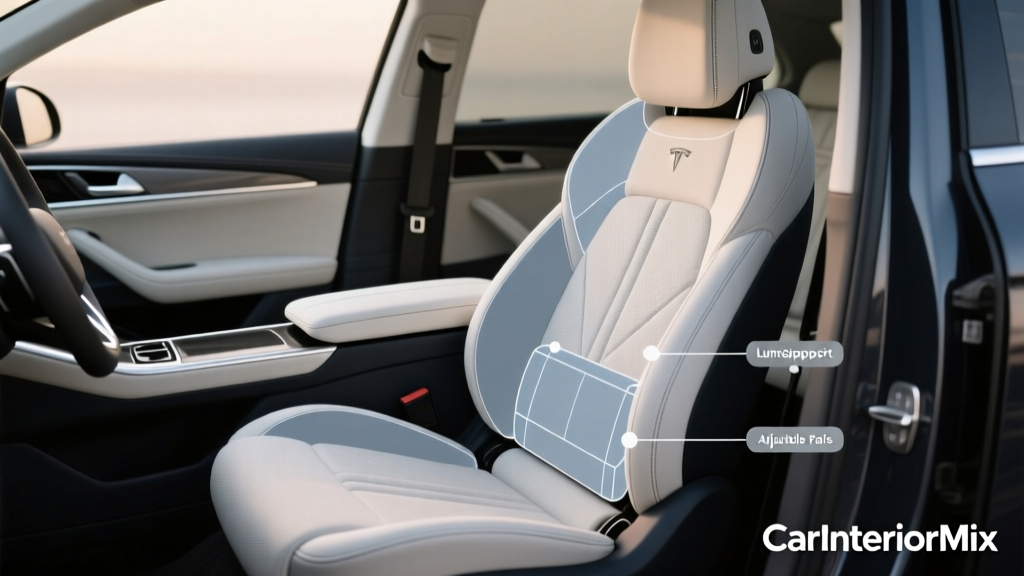
Orthopedic Seat Modifications by Car Model (2026)
If you?ve ever finished a long drive with a sore lower back, numb legs, or tight shoulders, you already know the seat isn?t just ?interior trim??it?s a core part of how your car fits your body. Orthopedic seat modifications can turn a painful commute into a comfortable one, but compatibility isn?t universal. A cushion that feels perfect in a friend?s SUV might sit awkwardly in your sedan, interfere with airbags, or slide around because of the seat shape.
This guide breaks down orthopedic seat modification compatibility by common car categories and popular models, plus what to check before you buy or install anything. You?ll learn which upgrades work best for flat seats versus sporty bolstered seats, how to avoid safety conflicts with side airbags and seat sensors, and how to choose solutions that actually stay put. The goal: comfort you can trust, without causing warning lights, squeaks, or safety issues.
Whether you?re adding lumbar support, raising the seat height, reducing pressure points, or improving thigh support, you?ll find practical tips, real-world examples, and step-by-step instructions you can apply today.
What Counts as an ?Orthopedic Seat Modification??
Orthopedic seat modifications range from simple, removable accessories to permanent upholstery and foam reshaping. Most drivers start with reversible options, then upgrade if they need a tailored fit.
Common orthopedic seat upgrades (from easiest to most involved)
- Lumbar support: inflatable lumbar pillows, memory foam lumbar pads, or built-in lumbar add-ons.
- Seat cushions: memory foam, gel-infused, or wedge cushions for pelvis angle and pressure relief.
- Neck/head support: adjustable headrest pillows for posture correction.
- Seat base reshaping: adding/removing foam under the seat cover to change contour and thigh support.
- Upholstery re-trim with orthopedic foam: professional, semi-permanent improvement for long-term comfort.
- Heated/ventilated seat pads: helpful for muscle relaxation and circulation, but must match seat design and wiring approach.
Compatibility First: The 7 Checks Before You Modify Any Seat
Before getting into car-model guidance, run through these checks. They prevent 90% of ?this doesn?t fit my car? headaches.
- Seat-mounted airbags: Many modern cars have side airbags in the seatback. Avoid thick wraps, straps, or upholstery work that crosses airbag seams.
- Occupant detection sensor: Some passenger seats use weight sensors that can trigger airbag warnings if you add thick cushions.
- Seat shape: Flat seats accept most cushions; aggressive bolsters can cause rocking or sliding.
- Headrest design: Fixed headrests or forward-leaning headrests (common in some compact cars) limit pillow compatibility.
- Seat material: Leather can be slippery for cushions without a grippy base; cloth tends to hold accessories better.
- Seat adjustability: If you already have power lumbar and tilt, you may only need fine-tuning (thin pad) rather than a thick cushion.
- Heat/ventilation: If you have ventilated seats, thick foam cushions reduce airflow and can make the feature feel weak.
Orthopedic Seat Modification Compatibility by Car Category (With Model Examples)
Instead of listing every trim level ever made, this section maps the most common seat designs to the orthopedic solutions that typically work best. Use the model examples to identify what your seat is likely to be like, then match the recommended upgrades.
1) Compact & Midsize Sedans (Balanced seats; usually very compatible)
Examples: Toyota Corolla/Camry, Honda Civic/Accord, Hyundai Elantra/Sonata, Nissan Sentra/Altima, Kia Forte/K5
- Typical seat traits: moderate bolsters, decent flatness on the seat base, headrests often adjustable.
- Best-fitting mods:
- Medium-profile lumbar pad (strap or friction fit)
- Gel or memory foam seat cushion (standard rectangle works)
- Wedge cushion (for drivers who feel ?tucked? or posterior pelvic tilt)
- Watch-outs: passenger seat sensors can be sensitive on some trims?test for warning lights after installation.
Real-world example: A Camry driver with tailbone pain often benefits more from a gel ?U-cut? coccyx cushion than a thick memory foam block, because it reduces pressure without lifting them too high toward the steering wheel.
2) Small Crossovers & SUVs (Upright posture; great for lumbar tuning)
Examples: Toyota RAV4, Honda CR-V, Mazda CX-5, Subaru Forester, Hyundai Tucson, Kia Sportage
- Typical seat traits: more upright seating angle, higher H-point (hip point), often firmer seat base.
- Best-fitting mods:
- Inflatable lumbar support (lets you fine-tune for long drives)
- Thin seat cushion for pressure distribution (avoid very thick pads that raise you too high)
- Headrest pillow if the factory headrest pushes your head forward
- Watch-outs: if you have seat ventilation, choose perforated cushions or low-profile mesh pads.
3) Trucks (Flat seat bases; high compatibility, but height matters)
Examples: Ford F-150, Chevrolet Silverado, RAM 1500, Toyota Tacoma/Tundra, Nissan Frontier
- Typical seat traits: flatter seat bottoms, lots of room, sometimes limited seat tilt range on lower trims.
- Best-fitting mods:
- Wedge cushions to improve thigh support and knee angle
- Firm lumbar pad to reduce slouching (especially with bench-style seats)
- Seat base foam add-on (professional) for drivers who want more contour
- Watch-outs: thick cushions can reduce headroom and change mirror alignment?recheck your seating position and steering wheel distance.
4) Sports Sedans, Hot Hatches, and Cars with Aggressive Bolsters (Most picky)
Examples: Volkswagen GTI, Honda Civic Si/Type R, Subaru WRX, BMW 3 Series (sport seats), Audi S-line seats
- Typical seat traits: tight bolsters on seat base and backrest, designed to hold you in place.
- Best-fitting mods:
- Low-profile lumbar pad (thin memory foam or inflatable)
- Bolster-friendly seat cushions with narrower footprints
- Professional foam reshaping if pressure points are severe
- Watch-outs: wide cushions can ?bridge? over bolsters and rock side to side; thick backrests can interfere with seat-mounted airbags.
Real-world example: A WRX owner who feels hip pinch from bolsters often gets better results from a narrow gel cushion than from adding thick foam, because thick foam increases the squeeze against the bolsters.
5) Minivans & Family Haulers (Comfort-focused seats; easy wins)
Examples: Honda Odyssey, Toyota Sienna, Kia Carnival, Chrysler Pacifica
- Typical seat traits: comfort-oriented cushions, wide seat bases, often softer foam.
- Best-fitting mods:
- Supportive lumbar pad (to prevent ?sinking? posture)
- Seat cushions to improve pressure distribution for longer trips
- Heat/ventilated add-on pads (if not factory-equipped)
- Watch-outs: softer seats can compress?choose cushions with a stable base so you don?t feel wobbly.
6) Older Cars (Great candidates?just inspect seat condition)
Examples: 2000s-era sedans/SUVs, older pickups, classics with worn foam
- Typical seat traits: foam fatigue, sagging seat base, flattened lumbar area.
- Best-fitting mods:
- Seat base rebuild (foam replacement) for permanent comfort
- Spring reinforcement or support mat under foam
- Modern orthopedic cushions as a quick fix
- Watch-outs: if the seat frame or springs are broken, a cushion only masks the problem?repair first.
Step-by-Step: How to Choose the Right Orthopedic Setup for Your Car
Step 1: Identify your pain points and posture goal
- Lower back ache: start with adjustable lumbar support.
- Tailbone pain: try a coccyx cut-out gel cushion.
- Numb legs/thigh pressure: consider a wedge cushion or firmer seat base support.
- Neck strain: evaluate headrest position and add a thin headrest pillow if needed.
Step 2: Measure your seat and check bolster width
- Measure seat base width at the narrowest point (between bolsters) and the widest point.
- Compare to cushion dimensions?aim for a cushion that sits inside bolsters rather than on top of them if your seat is sporty.
Step 3: Choose the right thickness
- Flat seats / trucks: medium thickness often works.
- Crossovers and cars with limited headroom: thin-to-medium is safer.
- Short drivers: be careful?extra height can improve visibility but may push you closer to the airbag and reduce steering wheel clearance.
Step 4: Install without compromising safety features
- Slide the seat fully back and raise it (if possible) for access.
- Place the cushion so it doesn?t block seatbelt buckles.
- Route straps behind the seat where they won?t cross airbag panels (usually labeled on the seatback).
- Test full seat travel (forward/back/up/down/recline) to confirm nothing binds.
- Start the car and check for airbag or seat warning lights.
Step 5: Fine-tune your driving position
- Set lumbar support so it fills the curve of your lower back?supportive, not pushing you forward.
- Adjust seat tilt so your thighs are supported without pressing behind the knees.
- Confirm you can reach the wheel with a slight bend in your elbows and your shoulders relaxed against the seat.
Product Recommendations: What Works Best for Most Car Models
Instead of naming one ?best? item for everyone, these are the most reliable categories and what to look for. When you?re shopping for orthopedic seat cushions, lumbar support for car seats, or posture-correcting headrest pillows, these specs matter more than brand names.
1) Lumbar support: inflatable vs. foam
- Inflatable lumbar pillow (best all-around compatibility)
- Pros: adjustable on the fly; works across sedans/SUVs/trucks; packs away easily
- Cons: pump bulb can be annoying to route; cheap valves may leak
- Memory foam lumbar pad (best for consistent feel)
- Pros: stable support; no moving parts
- Cons: can be too thick for sport seats; may run warm in summer
2) Seat cushions: gel, memory foam, or wedge
- Gel + coccyx cut-out: excellent for tailbone pressure and long commutes.
- High-density memory foam: best for overall pressure distribution (choose a grippy bottom).
- Wedge cushion: best for improving hip angle and thigh support, especially in trucks and older seats.
3) Anti-slip and stability features to prioritize
- Rubberized or silicone dot base
- Anchor strap(s) that don?t cross airbag seams
- Contoured underside that matches bucket seats
Common Mistakes to Avoid
- Buying the thickest cushion available and accidentally changing your driving ergonomics (mirror alignment, steering wheel reach, headroom).
- Covering seat-mounted airbags with wraparound covers or tight straps.
- Ignoring passenger seat sensors?if an airbag light appears after adding a cushion, remove it and troubleshoot.
- Using slippery cushions on leather without an anti-slip base, leading to constant repositioning.
- Stacking multiple accessories (seat cushion + wedge + thick lumbar) and creating a hunched posture.
- Assuming pain means ?more support??sometimes pain comes from too much lumbar bulge or a seat angle that compresses the thighs.
When to Consider Professional Seat Foam or Upholstery Work
If you?ve tried two or three accessory-level solutions and still can?t get comfortable, your seat may need structural correction. Professional orthopedic seat modification can be a game-changer for:
- Seats with collapsed foam or broken internal support
- Drivers with very specific medical needs (post-surgery support, severe sciatica triggers)
- Performance seats that don?t accept cushions well
Practical tip: Ask a reputable upholstery shop whether they can add high-density foam inserts under the factory cover while preserving airbag seams and keeping the seat looking OEM.
FAQ: Orthopedic Seat Modification Compatibility
Will a seat cushion mess with airbags?
A seat-bottom cushion usually won?t affect airbags directly, but you must avoid covering seatback airbag seams with straps or thick add-ons. If your car has seat-mounted side airbags, keep modifications away from the airbag deployment area and avoid tight-fitting seat covers unless they?re specifically airbag-compatible.
Why did my airbag or passenger sensor light come on after adding a cushion?
Some passenger seats use weight sensors to detect occupants. A thick cushion can change how weight is distributed and confuse the sensor. Remove the cushion to confirm the cause. If the light persists, have the system checked?don?t ignore it.
What?s better for long-distance driving: gel or memory foam?
Gel cushions tend to reduce hot spots and tailbone pressure, while high-density memory foam spreads load evenly. If you have coccyx pain, start with gel + cut-out. If you feel general fatigue and pressure, memory foam is often more comfortable.
Are orthopedic cushions compatible with ventilated seats?
They can be, but thick foam blocks airflow and makes ventilation feel weaker. Look for low-profile, breathable cushions (mesh or perforated designs) if seat ventilation is a priority.
How do I keep a cushion from sliding on leather seats?
Choose a cushion with a grippy rubber base and an anchor strap. If it still slides, add a thin non-slip mat (like shelf liner material) between the cushion and seat?avoid adhesives that can damage leather finishes.
Is it worth upgrading the seat foam instead of using accessories?
If your seat is worn out or you need a precise fit, yes. Foam rebuilding provides a more OEM-looking result, doesn?t raise your seating position as dramatically as thick cushions, and can be tailored for lumbar and thigh support?just make sure the shop respects airbag seams and sensor locations.
Your Next Steps
- Start simple: pick one change?usually adjustable lumbar support or a coccyx-friendly cushion.
- Confirm compatibility: check for seat airbags, sensor sensitivity, and bolster width before buying.
- Install and test: verify full seat movement, seatbelt access, and warning lights.
- Fine-tune your posture: small adjustments in tilt, lumbar placement, and steering wheel reach often deliver the biggest comfort gains.
- Upgrade if needed: if accessories don?t solve it, consider a professional foam reshape for a long-term orthopedic seat solution.
If you want more car interior comfort upgrades, fitment tips, and buyer-focused comparisons, explore more guides on carinteriormix.com.